What Is a Creative Director? Career Path and 2026 Salary
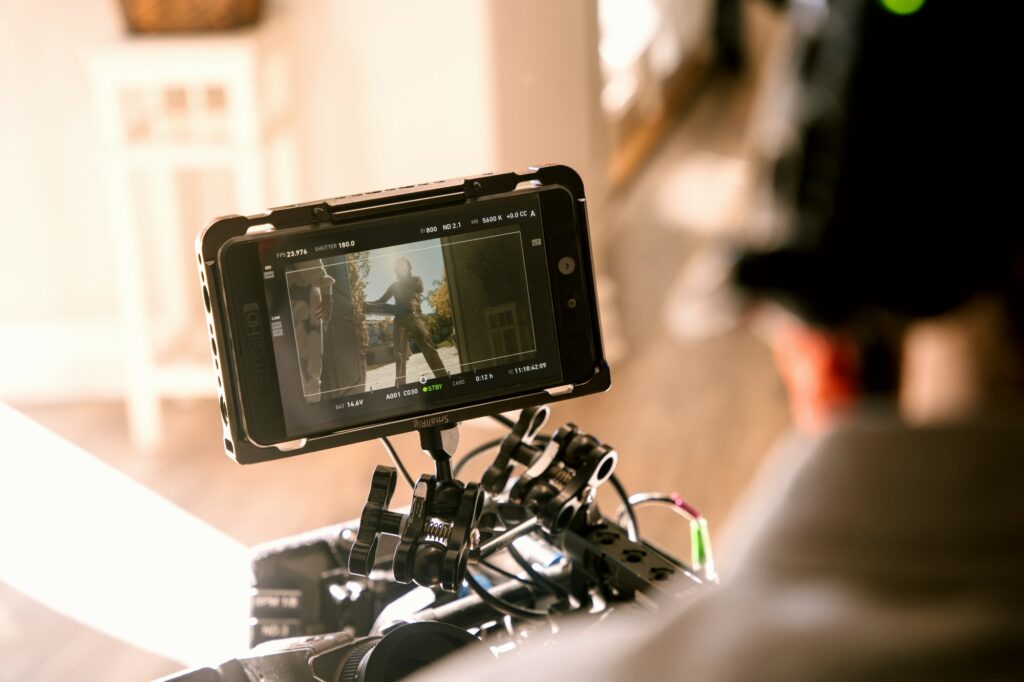
I have worked as a creative director for close to twenty years, across more than 2,100 productions for brands including Hyundai, Qualcomm, ESPN and Netflix. In that time I have watched the title get applied to everyone from a solo freelance designer to the person running creative for a global brand.
That confusion costs companies money. So: what is a creative director, how does someone become one, and what does the job actually pay? Here is the honest version, with 2026 salary data pulled from eight separate sources.
What is a creative director?
A creative director owns the creative vision and holds the standard. That is the short version. The longer version is that the job sits at the point where business strategy becomes creative work, and it is judged on whether the output moves the business, not whether it wins awards.
In practice the role covers four things.
Setting the vision. Translating a business objective into a creative platform. Not “we need a video.” Rather, what does this brand need to say, to whom, in what tone, so that someone changes their behaviour.
Holding the standard. Deciding what is good enough to ship. This is the part most people underestimate. A creative director is the last line of defence between a mediocre idea and a public launch.
Directing people. Designers, writers, editors, photographers, agencies, freelancers, production companies. Often the creative director is not making anything themselves. They are getting better work out of the people who are.
Owning the outcome. When the campaign underperforms, it is the creative director’s problem. That accountability is the difference between this title and every title below it.
What a creative director is not
The role gets confused with three adjacent jobs, and the confusion gets expensive when it shows up in a job description.
An art director owns the visual craft of a specific piece. They are hands-on and execution-focused. A creative director sets the direction the art director works within.
A design director leads the design team and the design standard specifically. The scope is one discipline. A creative director’s scope spans copy, design, film, photography, and usually the strategy underneath all of it.
A marketing manager owns channels, budgets and performance. They may commission creative work but they do not direct it. Companies that ask a marketing manager to double as a creative director usually end up with work that is on-brief and forgettable.
Agency creative director versus in-house
Same title, different job.
Agency creative directors work across many brands at once, usually five to ten. They build a broad portfolio fast, pitch constantly, and live inside a billable-hours model. The variety is the appeal.
In-house creative directors go deep on one brand. They know the product, the customers and the internal politics in a way no agency ever will. They also inherit every unglamorous request in the building, from trade show graphics to the CEO’s slide deck.
Neither is better. They select for different temperaments, and as the salary data below shows, they pay differently too.
Not sure which role you actually need?
Job descriptions get written before anyone decides what the job is. If you are trying to work out whether you need a creative director, an art director, or something part-time, that is a short conversation.
Talk it throughHow to become a creative director
There is no certification and no single route. But the path is more consistent than most people assume.
The typical timeline
Most people reach creative director after six to ten years in a creative discipline, according to Built In’s role data. The common progression runs designer or copywriter, then senior, then associate creative director, then creative director. Roughly three to five years at each step, faster at agencies, slower in-house.
A bachelor’s degree in design, art, marketing or a related field is standard but not universal. Portfolio beats credential in almost every hiring conversation I have been part of.
What actually gets you promoted
The promotion is not awarded for being the best designer or the best writer. It is awarded when someone decides you can be trusted with other people’s work and with the client relationship. Three things move that decision.
You can defend the work. Not with taste arguments. With reasoning a CFO would accept. Creative directors who cannot explain why a decision serves the business get overruled constantly, and eventually stop being asked.
You make other people’s work better. The first real test is whether the team’s output improves when you are involved. If your feedback makes juniors defensive rather than better, you are not ready, however good your own work is.
You have run something end to end. Not contributed to. Owned. A campaign, a launch, a rebrand, with a budget and a deadline and consequences.
The two things that stall careers
The first is staying purely hands-on. Some of the best designers I know never became creative directors because they could not stop doing the work themselves. Direction is a different job, and it requires giving up the part you probably enjoy most.
The second is treating creative direction as a taste job. Taste is table stakes. Judgment about what the business needs is the actual skill, and it is learned by sitting close to commercial decisions, not by consuming more design.
What does a creative director earn? 2026 salary data
Here is where it gets messy. Published averages vary by more than $50,000 depending on which source you check, because they measure different things. Employer-reported job listings, self-reported salaries and crowdsourced total compensation all produce different numbers.
National averages
| Source | Average base | Notes |
|---|---|---|
| Salary.com | $143,819 | Employer-reported listings |
| Built In | $144,336 | $167,714 including additional comp |
| ERI | $143,966 | Range $102,648 to $173,767 |
| Glassdoor | $157,691 | Includes bonuses and additional pay |
| ZipRecruiter | $129,330 | 25th to 75th percentile: $99,500 to $152,000 |
| PayScale | $103,620 | Self-reported, skews junior |
The honest summary: base pay clusters around $130,000 to $145,000 nationally, and total compensation for an established creative director sits closer to $160,000 to $180,000 once bonuses are counted.
For context, the Bureau of Labor Statistics tracks art directors as the nearest official occupation code and reports a mean annual wage of $111,040 across roughly 135,000 jobs. That figure runs lower because it captures the whole discipline, not just the director tier.
By seniority
The spread widens sharply at the top.
- Associate creative director: around $120,000
- Creative director: $130,000 to $158,000 base
- Senior creative director: approximately $180,320 average, per Glassdoor’s 2026 data
- Executive creative director: approximately $193,593 total compensation at 10 to 19 years experience, per PayScale
- Chief creative officer: approximately $289,627 average total compensation, reaching $525,162 at the 90th percentile
By industry and employer
Industry choice moves the number more than most people expect. Glassdoor’s 2026 industry data puts information technology highest at a median total pay of $225,431, followed by telecommunications at $217,991 and financial services at $206,298. Healthcare lands at $197,046 and arts and entertainment at $168,244.
Advertising agencies, which invented the role, tend to pay below these. Agencies bill client time, and the margin does not support $200,000 creative salaries outside the top global networks. A mid-size agency of 50 to 200 people typically pays $110,000 to $150,000. A large network runs $140,000 to $180,000 for a creative director owning a department or a flagship account.
Company size matters too. Salary.com data shows enterprise employers with 5,000-plus staff averaging around $160,860, while startups average closer to $136,040.
Creative director salary in San Diego
Local numbers, since this is where I work.
| Source | San Diego average |
|---|---|
| Salary.com | $155,700 |
| Indeed | $154,512 |
| Built In | $139,286 |
| ZipRecruiter | $137,311 |
Robert Half’s 2026 guide puts the San Diego range at $125,460 to $199,875. Glassdoor’s typical range runs wider, $124,051 to $219,407, because it includes total compensation.
San Diego pays above the national average but well below Los Angeles or New York, where Robert Half’s high-tier benchmarks exceed $210,000. Given the cost-of-living difference, San Diego creative directors often end up with comparable purchasing power to their Los Angeles counterparts.
That number give you pause?
A full-time creative director is a real commitment, and the salary is only part of it. If creative direction is your bottleneck but the volume does not justify the hire, there is a middle option.
See how fractional worksFreelance and fractional rates
This is the fastest-moving part of the market, and the part most salary guides handle badly.
Freelance creative directors bill from around $100 per hour at the lower end of the market, with senior day rates running considerably higher. Glassdoor’s freelance benchmark of $78 per hour tracks low because it averages in a lot of junior work carrying the same title.
Fractional creative direction, meaning embedded part-time leadership on a monthly retainer rather than project work, generally runs $5,000 to $15,000 per month. I have broken those numbers down in detail, including what a retainer should cover and when the model stops making sense, in a separate guide to fractional creative director cost.
What it costs to hire one
If you are on the hiring side, the salary figure is not the number you should be budgeting against. The fully loaded first-year cost of a full-time creative director runs well past the base salary once you add benefits, payroll taxes, recruiting fees and the ninety-day ramp before they are productive.
The trade-off is worth stating plainly. A full-time creative director gives you availability, institutional memory and someone in every meeting. A fractional one gives you seniority you probably could not otherwise afford, applied to the specific problems that need it. The right answer depends on how much creative work you are actually producing.
The rough test I use: if your team is shipping enough creative that a senior person would be occupied four or five days a week, hire full-time. If the volume is real but the direction is the bottleneck rather than the execution, fractional does the job for a fraction of the cost.
Frequently asked questions
Is creative director a good career?
It pays well and the ceiling is high, with chief creative officer roles averaging near $290,000 in total compensation. The trade-off is that you stop making things and start being accountable for things other people make. Some people find that liberating and some find it hollow. Be honest with yourself about which you are before you chase the title.
Do you need a degree to be a creative director?
No. A bachelor of arts in a creative field is common and helps with the first job, but no employer at director level is checking transcripts. Portfolio, references and track record decide it.
How long does it take to become a creative director?
Typically six to ten years of professional experience in a creative discipline. Agency paths tend to be faster because the volume of work compresses the learning curve.
What is the difference between a creative director and an art director?
An art director owns the visual craft of a specific piece and is hands-on. A creative director sets the direction the art director works within, spans multiple disciplines, and is accountable for whether the work achieves the business objective.
What is a fractional creative director?
The work is the same as a full-time creative director. The engagement model is not. A fractional creative director is embedded part-time on a monthly retainer, usually across a handful of clients, rather than employed full-time by one company.
Is AI replacing creative directors?
It is compressing demand for mid-level execution roles while raising the premium on senior creative judgment. Deciding what should exist and whether it is good enough has become more valuable, not less. The production work underneath it has become cheaper and faster.
If you are on the hiring side
I work as a fractional creative director with in-house marketing teams. That means setting the creative standard, directing internal teams and outside vendors, and bringing a full production arm when execution is needed.
If you are weighing a full-time hire against the alternatives, I am happy to talk through which one fits your volume. No pitch required.
Think your creative should be better than it is?
I work with a handful of scaling brands at a time as an embedded fractional creative director. A thirty-minute discovery call will tell us both whether the fit is real.
Book a Discovery Call